

Valerie Ehrenholz didn’t inherit simple land. Her grandfather bought a property with hills too steep for a plow and low ground so wet with muskeg it swallows your boots. For decades, that combination looked like a limitation. Today, it’s the reason her cattle operation works at all.
“I have often wondered why my grandfather bought this land,” Valerie says. “The hills make it difficult to raise crops and the muskeg in the low areas makes it difficult to walk through the pastures. However, this land is ideal for raising and grazing cattle, and as it turned out, that is the thing that allows me to make a living on this small farm. Thanks Opa.”
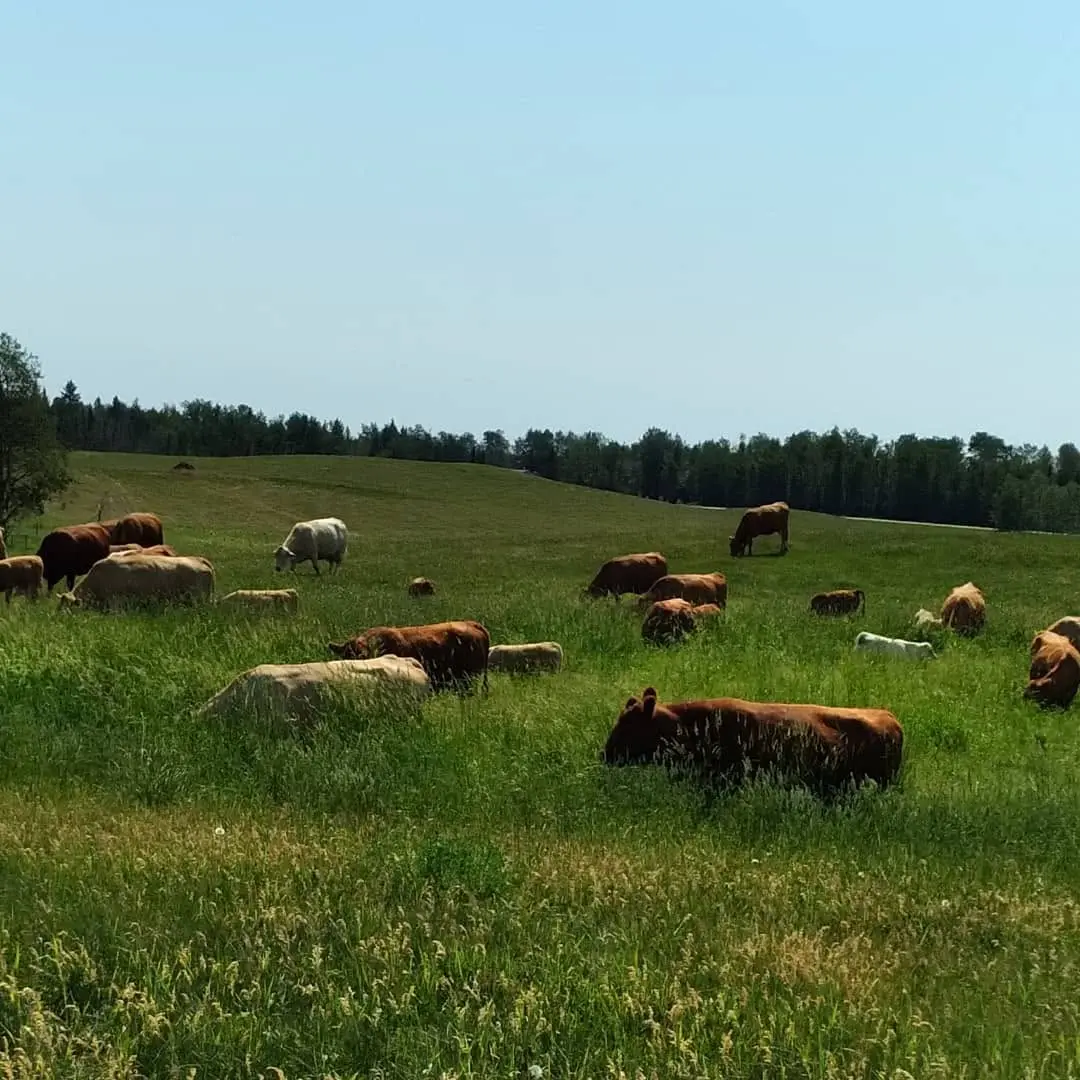
Ehrenholz Farms sits on a mix of tame pasture, woodland, and muskeg wetland northwest of the city grid most Albertans know. It’s not flashy land. But it’s the kind of land that, managed well, can carry a herd through a whole season without ever running out of grass.
The bush scattered across the property does double duty too. It gives the cattle shelter when storms roll through, and it shares space with deer, moose, coyotes, black bears, and birds that live in the pastures alongside the herd. Some of the higher ground is broken for crops, with about half the rotation in mixed hay, planted right next to the pastures it eventually feeds. In a good year, when the grass outgrows what the cattle can eat, some of it gets cut for hay too, though Valerie says that only happens rarely.
Grazing by what the grass is doing, not by the calendar
Valerie runs a rotational grazing system, moving her beef cattle through sections of pasture every few days. The pace depends on how fast the cattle are knocking the grass down and how close they are to water, since access to water is often what decides when a herd has to move on.
The low, muskeg-type ground grows grass fast, even in dry years, though her cattle would rather be up on the hills. That preference used to shape her grazing order: send the cattle to the lowland grass first, before it matures and loses palatability. But Valerie has since learned the hilltop grass carries its own timeline. One of the dominant grass species up there can develop toxic compounds as it matures, compounds that are far less concentrated earlier in the season. So the order flipped. Now the hilltops get grazed early, while the grass is still vegetative, and the lowland grass, safe to eat even once mature, gets saved for later.
It’s the kind of detail that only shows up after years of watching the same land respond to the same decisions. Valerie also watches for signs of overgrazing and underuse, knocking down patches of thistle and shrub before they take hold, tracking weed flowering times so she can catch and remove them before they spread, and checking hillsides for water erosion. Fencing chores, which run all season, double as a reason to walk the land and take stock of it. At the start of each growing season she checks the perimeter fences to make sure the cattle can’t wander onto nearby roadways, then spends the summer setting up and adjusting temporary electric fence to control exactly which sections the herd can reach.
Winter brings a different rhythm. Once the ground is dormant and covered in snow, the cattle get full run of the pasture closest to the yard, since there’s no grass left to damage. Valerie moves the hay feeders every day or two so the manure spreads out rather than piling up in one spot. Come spring, the pattern shows up in the grass itself: greener, taller patches mark exactly where the herd wintered, fed by both the manure and the extra moisture held by the leftover hay on the ground.
Learning three generations deep
The land wasn’t built for crops, which is exactly why it works for cattle. Raising cattle here is Valerie’s main source of income, so the health of her grasslands isn’t just an environmental question. It’s the thing her livelihood depends on.
Valerie’s dad and grandfather ran cattle on this same ground, but without the grazing knowledge available today. When she took over, she had to build her own understanding of rotational and adaptive grazing, piecing it together from her dad, from neighbours, and from workshops, conferences, and books.
The results are showing, even after just a few years of more deliberate management. Areas the cattle used to pick around are getting grazed properly, and grass that used to get hammered is now thick enough to choke out thistles and stand up to grasshoppers. Valerie is hopeful that healthier, thicker grass will eventually mean more water held in the soil, a buffer against the drought years that have hit her dugouts hard. Her goal, she says simply, is a healthier ecosystem across the whole farm.
Drought, grasshoppers, and learning to live with the neighbours
Overgrazing has been one of Valerie’s steepest learning curves, especially in dry years when the grass struggles to recover. Some of that pressure traces back to years of continuous grazing before her time, which left behind weed problems and compacted soil she’s still working to correct.
Drought compounds everything. Heat can push the grass into dormancy so it stops growing entirely until cooler, wetter weather returns, and grasshoppers tend to thrive in exactly those hot, dry stretches, adding another layer of pressure on the same acres. When her dugouts run low, Valerie has to pull cattle off pastures that no longer have reliable water. To protect what water she has, she’s started fencing cattle out of the dugouts directly and pumping water to nearby troughs instead, which keeps the water cleaner and stops the dugout banks from slumping and losing capacity.
Wildlife adds its own complications. Moose and deer are drawn to the grass and hay, and while Valerie enjoys watching them, they also damage fences, letting cattle into pastures before they’re ready or out onto the road. She’s watching for local elk populations to move in too, since a herd of elk could do serious damage to standing hay and baled feed, and elk fencing around the hay yard may be next if that happens. For now, the response is the same one that runs through most of her grazing work: check the herd, check the fences, and adjust as conditions change.
A summer with the cranes
Four years ago, Valerie’s dad called from a neighbouring field, certain he was looking at two emus. Valerie and her sister drove out to see for themselves and found two sandhill cranes instead, which ended up spending the whole summer in the pasture. Valerie and her family saw them all season while setting up electric fences and checking cattle. The cranes have returned most years since, though never for as long as that first summer.
“It is exhilarating to know that my work on the pastures has created habitat that is attractive to such wildlife,” Valerie says, “and this knowledge pushes me to continue this work.”
That’s the quiet current running through everything at Ehrenholz Farms. The grazing decisions, the fence checks, the weed patrols, they’re not just about feeding cattle. They’re about keeping a piece of hard, hilly, muskeg-laced land healthy enough to support a family’s income and, it turns out, a pair of sandhill cranes too.
Learn more about the happenings at Ehrenholz Farms by following on Facebook, Instagram, or their YouTube channel!
────────────────────────────────────────────────────────────────────────
Alberta’s rangelands support more than we usually notice. Meet the people who steward them at Open Farm Days, August 15 and 16.